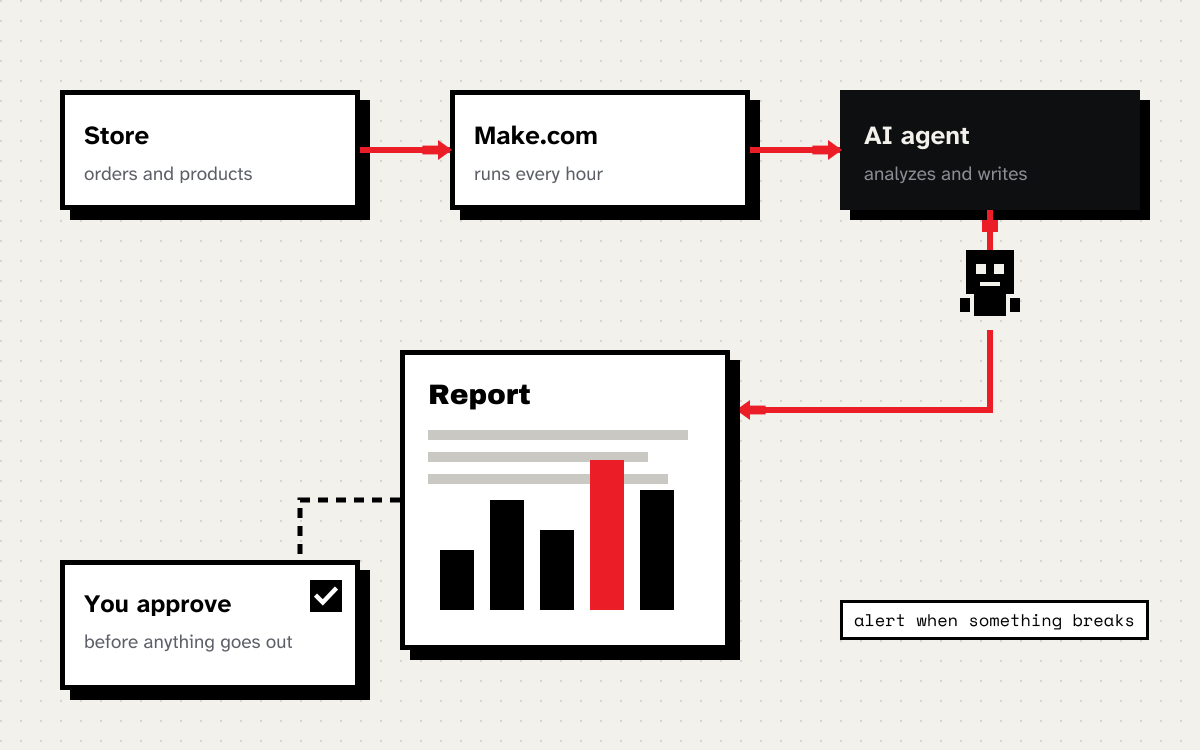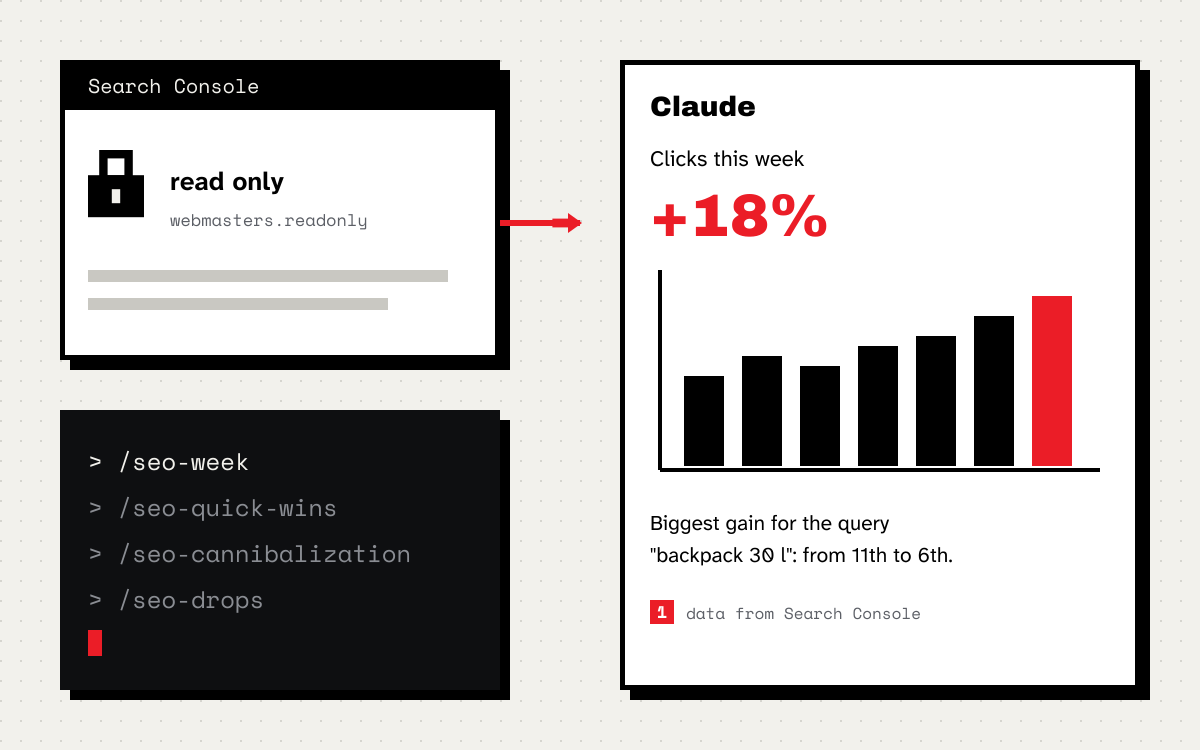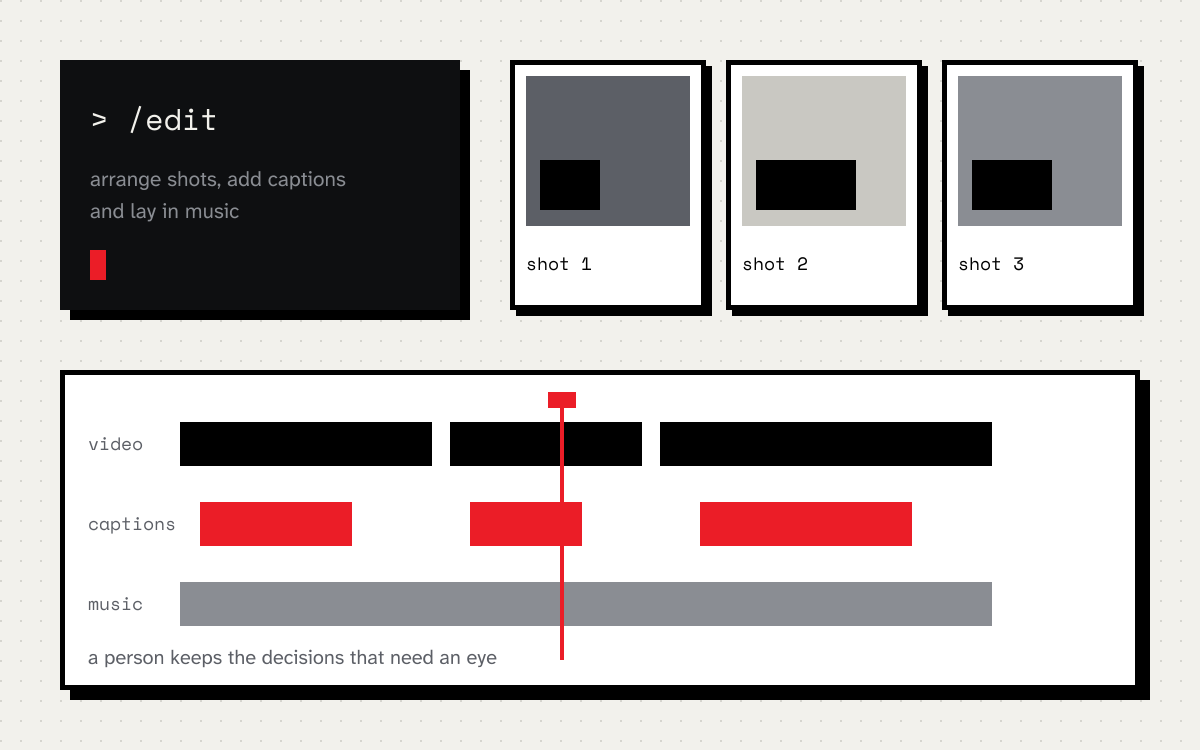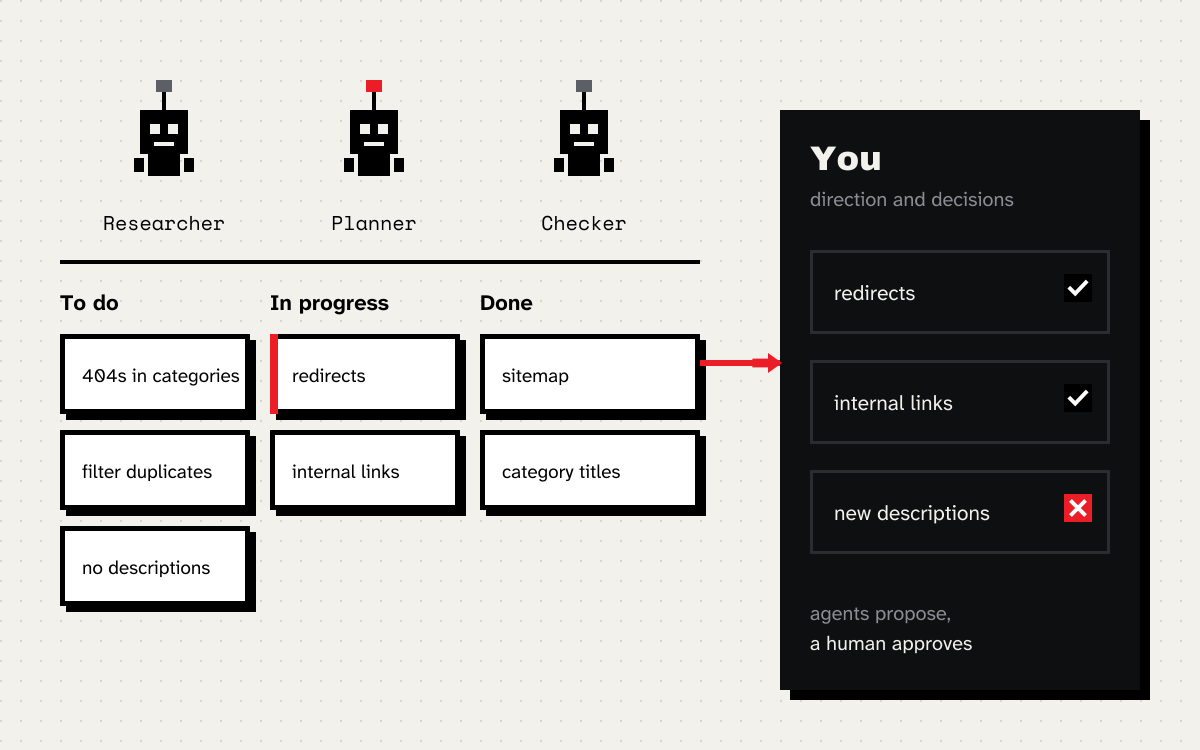
An automation diagram: the store, Make.com and an AI agent produce a report, and a person approves the result before anything goes out.

Why clients come to me

Someone on the team copies data from one system to another every day, builds the same report and answers the same questions. It is not work that needs a person, but it eats half their day.

What I do

  • Make.com scenarios that connect your tools.
  • Python scripts where ready-made blocks are not enough.
  • AI agents that analyze, write and watch over processes, with a person approving the results.
  • Claude skills tailored to the way you work.
  • SEO automation, meaning monitoring, reports and content checks.

What you get

  • A working automation with a description of what it does and when.
  • Alerts when something goes wrong.
  • Onboarding for the person who will use it.

Who it is for

  • Teams that lose time on repetitive tasks.
  • Stores with lots of products, data and reports.
  • Companies that want to use AI agents sensibly, not as a buzzword in a presentation.

Questions and answers

How is an AI agent different from a regular automation?
An automation follows a fixed recipe. An AI agent chooses its own next steps within the task you give it, for example it reviews a site and suggests fixes. That is why I always set a point where a person approves the result.
Is my data safe?
I design automations so that data goes only where it has to. At the start we agree which services we use and what may pass through them.
What happens when an automation breaks?
You get an alert, and I know where to look for the cause. I document every automation so it can be fixed without guesswork.

Tell me what you want to improve

An audit, a migration, visibility in AI assistants or a tool that does not exist yet. I reply myself, no sales team in between.

hello@deadnet.ovh

30 minutes online, pick a free slot in my calendar.